
From spreadsheet to CRM: when (and how) to make the switch
The 5 signs your sales team has outgrown its spreadsheet, plus a step-by-step migration plan to move to a CRM in a weekend without losing a single deal.
12 April 2026 · LeadManagement Team
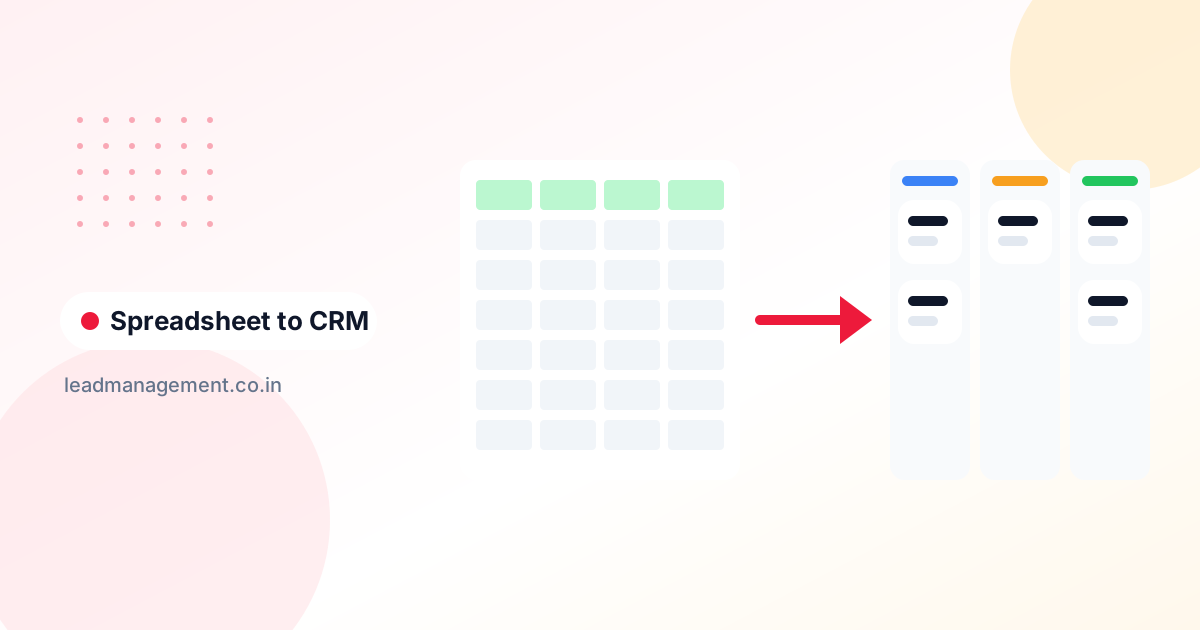
Every small business starts in a spreadsheet, and a spreadsheet is genuinely the right tool for the first 50 leads. The trouble is, nobody notices the moment it stops being the right tool — they just notice the deals they’re losing six months later.
Here’s how to spot the moment, and how to move without breaking anything.
The 5 signs you’ve outgrown your sheet
- You can’t tell who owns what. Two reps both think they’re following up with the same lead. Or worse — neither of them is.
- Follow-ups slip. Anything that was supposed to happen “next Tuesday” lives only in someone’s memory. Memory loses.
- The owner is the bottleneck. Reports take a Sunday afternoon to build because only one person knows the formulas.
- Conflicts on save. Two people open the sheet, make changes, and one of them silently overwrites the other.
- You can’t answer “what’s our pipeline this month?” in under 30 seconds. If the answer requires opening a file, you’ve outgrown it.
Hit three of these, you needed a CRM six months ago.
Pick the smallest CRM that solves the problem
The biggest mistake first-time CRM buyers make is buying for the company they hope to be in five years, not the one they are today. Symptoms: 6 months of “implementation,” a half-configured system nobody uses, and a sales team that quietly goes back to the spreadsheet.
For a team of 1–10, you need exactly four things:
- A lead list with owner, stage, and next-action fields
- A pipeline view (Kanban) of deals by stage
- Activity logging — calls, emails, WhatsApp — against each lead
- Reminders for follow-ups that fire on the rep’s phone
Anything else is a “nice to have” you can add in month three. Don’t pay for marketing automation, custom objects, or AI scoring on day one. You’ll never use them.
The weekend migration plan
You can do this in two days without losing a deal.
Friday evening — clean the sheet
Before anything moves, fix the data:
- Delete leads with no activity in 12+ months (export them to a separate “archive” tab — don’t lose them, just get them out of the way)
- Standardize the stage names (a lead is either new, qualified, proposal, won, or lost — drop the 14 in-between statuses)
- Fill missing owners. Every row needs one.
Two hours, max. Don’t try to make it perfect — perfect is the enemy of done.
Saturday morning — import
Most CRMs accept a CSV upload with column-mapping. The fields you actually need:
- Name, company, phone, email
- Source (where the lead came from)
- Stage
- Owner
- Last activity date
- Notes (concatenate every previous note column into one)
Import a test batch of 20 first. Verify it looks right. Then import the rest.
Saturday afternoon — set up the pipeline
Build the Kanban with your 5 stages. Set up these three reports:
- My pipeline this month (per rep)
- Stuck deals (no activity in 14+ days)
- Won/Lost this month
That’s the entire reporting layer for a small team. You can add more later — or, more honestly, you probably won’t need to.
Sunday — train the team
One 30-minute call. Three things only:
- How to add a new lead (in 30 seconds, on mobile)
- How to log a call/WhatsApp (in 15 seconds)
- How to move a deal between stages
Then make a rule: from Monday, anything not in the CRM didn’t happen. Commission, leaderboards, performance — all of it pulls from the CRM. The team will adopt because they have to.
The first 30 days
Adoption fails when leadership doesn’t use the system themselves. If the founder still asks for updates over WhatsApp instead of opening the pipeline view, the team learns the CRM is theatre. Open the pipeline in your 1:1s. Reference the CRM data in your weekly meeting. Within a month, it’s the source of truth — and everyone moves on.
You don’t have to switch tomorrow
If you’re not at three of the five signs yet, stay on the spreadsheet. It’s free and it works. But put a calendar reminder for 90 days from now to re-read this list — by then, you might be ready.